How Xi Jinping Is Speeding Up China’s Collapse — A Leader Who Isn’t Building the Future, Just Burning It
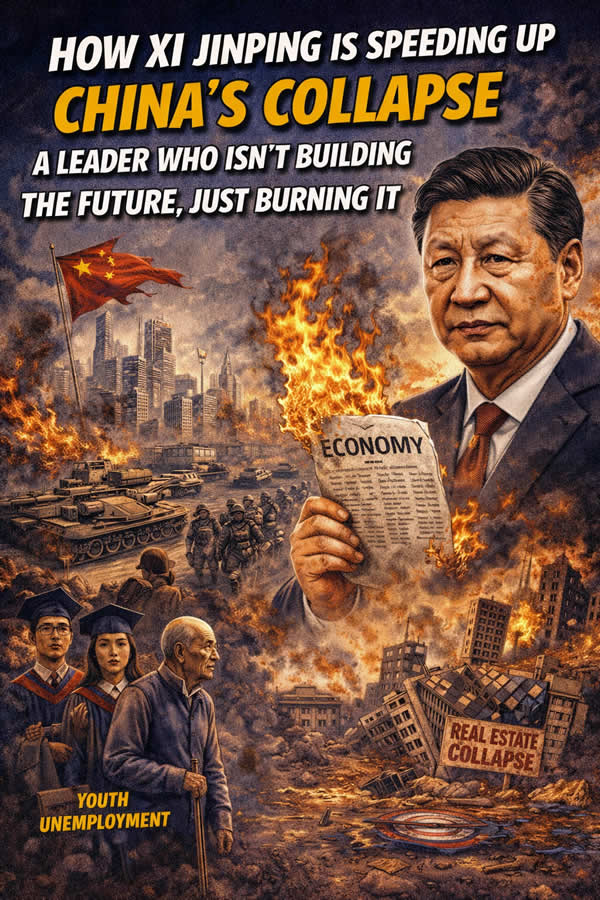
A Global Power Tightens Its Grip and Snuffs Out Its Own Momentum
China under Xi Jinping was supposed to be the unstoppable force — the economic powerhouse that overtook every competitor, rewrote the global rulebook, and charted a new world order. Instead, what’s unfolding looks less like geopolitical ascension and more like strategic self-sabotage. Xi’s iron-fist policies, political purges, demographic disasters, and economic mismanagement are doing something unexpected: accelerating China’s collapse from within.
First, there’s the economy — once the envy of the world. Growth that used to roar now coughs. Factories idle, real estate debt rots like forgotten fruit, and consumers clutch their wallets while global competitors innovate. Central planners and party officials endlessly cajole, threaten, and cajole again — but you can’t bully economic gravity. Investment dries up when future profits look like a gamble in a rigged casino.
Then there’s the demographic bomb. Birth rates have plunged for years, and policies meant to increase families feel like offering a coupon for happiness that expired in 1995. Xi’s government proudly announces social goals while ignoring the reality that a shrinking, aging population robs any nation of energy, creativity, and long-term productivity. China is not just aging — it’s getting slower, and it’s doing it on purpose.
Politically, Xi has centralized power like a monarch who believes strength is measured in arrests and loyalty oaths. Dissent isn’t debated; it’s erased. Intellectual life shrinks, artistic expression withers, and every institution bends inward toward a single voice — his. But history shows us that systems that suppress feedback and crush alternatives don’t survive crises — they magnify them. A state that can’t hear its own people is a ship that can’t avoid the iceberg until it’s too close.
On the world stage, the China that once coaxed rivals with trade and soft influence now flexes military ambitions and diplomatic bluster. But bluster without broad alliances is like fire without fuel — bright for a moment, then gone. Nations that once hesitated now hedge their bets, diversify away, and quietly whisper, “We need options.” When former friends start buying less and seeking alternatives, you know the muscle has lost its grip.
And then there’s the core irony: a regime so fearful of internal instability that it tightens control at every level — but in doing so, cultivates the very instability it seeks to prevent. Fear, after all, breeds cracks. A society that can’t adapt, can’t refresh its leadership, can’t generate new ideas is not stable — it’s stagnant.
Xi Jinping may have wanted a legacy of strength. But what history remembers is rarely what leaders intend. Goliaths fall not always by external blows, but by forgetting that strength must be renewable, not just enforced. China today looks less like a rising dragon and more like a sleeping giant that built its own tomb.