

A fact‑based explanation of recent developments, key events, and broader dynamics in the ongoing tensions between Iran, the United States, and Israel.
The conflict involving Iran, the United States, and Israel has evolved into a complex regional crisis with military, political, and diplomatic dimensions. It stems from longstanding tensions over security, nuclear programs, regional influence, and historical rivalries. In early 2026, tensions escalated into direct military engagements that have continued into March 2026, affecting the wider Middle East region.
Origins and Escalation
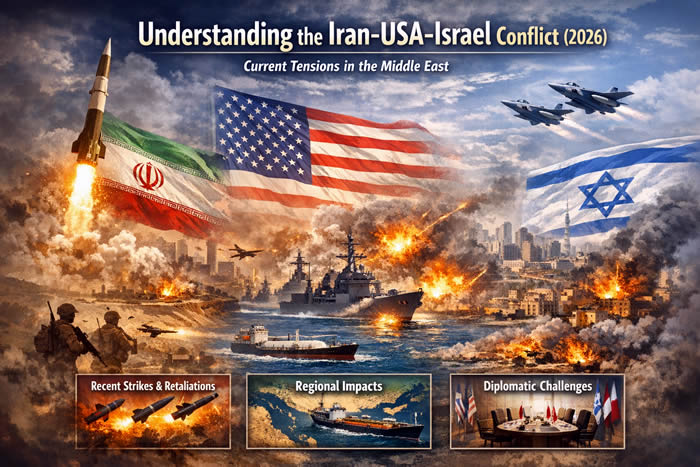
The current phase of conflict traces back to repeated exchanges of strikes and military contention involving Iran and Israeli forces, with the United States providing support to Israel. After years of proxy confrontations and escalating regional incidents, coordinated aerial and missile strikes by the United States and Israel targeted multiple locations inside Iran beginning in late February 2026. These strikes included military and strategic targets and marked a significant escalation compared with prior tensions.
In retaliation, Iran launched missile and drone attacks against Israel and against U.S.–linked positions across the Gulf region, including bases and allied facilities. These retaliatory actions have struck cities and military installations, contributing to casualties and infrastructure damage in both Israel and parts of the Gulf.
Recent Military Developments
Since late February 2026, military activity between the parties has included:
-
Israeli strikes in Iranian territory, including those resulting in the loss of high‑level Iranian commanders, which Iran has publicly acknowledged.
-
Iranian missile and drone launches directed at Israeli territory and U.S. interests in the region, resulting in both direct and indirect impacts on civilian and military targets.
-
Cross‑border hostilities extending into neighbouring areas as regional actors are affected, broadening the conflict’s footprint.
These exchanges have contributed to uncertainty about the trajectory of the conflict, with periodic announcements of further strikes, retaliatory actions, and defensive responses.
Regional Impacts
The escalation has influenced security perceptions across the Middle East. Some Gulf states have publicly expressed concern about the conduct of military operations, particularly around coordination and communication related to regional security.
In addition, key strategic points such as the Strait of Hormuz — a vital global energy corridor — have become focal points for concern, as disruptions or escalations in the area could have broader implications for international trade and energy markets.
Diplomatic and Strategic Context
Diplomatic efforts to manage or de‑escalate tensions have occurred alongside military actions. Talks between Iran and other nations — including indirect discussions involving nuclear issues — have faced setbacks and interruptions. Despite repeated calls from various international actors for restraint and de‑escalation, decisive breakthroughs have remained elusive.
The conflict’s wider context includes years of mutual distrust, disagreements over nuclear ambitions, and differing regional security visions. Iran maintains that its policies are defensive and sovereign, while Israel and the United States cite concerns about security threats and regional stability.
Human and Economic Consequences
The conflict has had immediate human consequences, including casualties among military personnel and civilians. Beyond the battlefield, shifting security conditions have affected markets and infrastructure, influencing energy prices and trade routes.
Summary
-
Conflict actors: Iran, Israel, United States
-
Nature of conflict: Military escalation with missile, drone, and air strikes
-
Regional impact: Security tensions in the Middle East; economic concerns over trade and energy routes
-
Diplomatic outlook: Ongoing efforts with no comprehensive resolution yet
The situation continues to develop, and future shifts in diplomacy or military engagement could alter the trajectory of tensions among these countries.