




Europe’s Industrial Giant Trips Over Its Own Policies and Calls It “Progress
Germany didn’t fall to invasion, sabotage, or natural disaster. It collapsed the modern way — through meetings, committees, press conferences, and PowerPoint slides. Once Europe’s economic engine, Germany has spent the last few years enthusiastically pulling out its own wires while announcing everything is “under control.” What followed wasn’t a sudden crash, but a slow-motion face-plant so obvious it feels intentional.
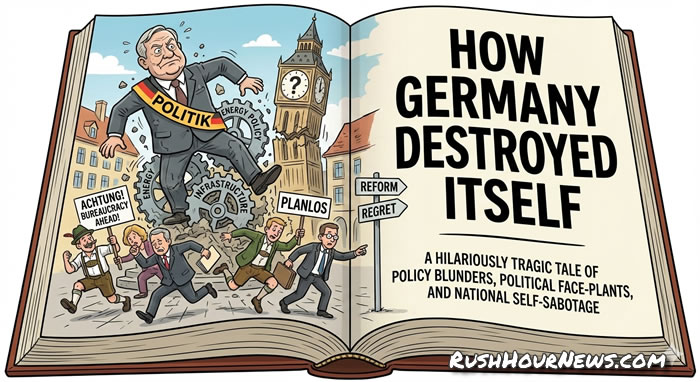
The masterpiece began with energy policy — or rather, the bold experiment of pretending energy doesn’t matter. Germany shut down reliable power sources, replaced them with hope and weather forecasts, and then acted surprised when factories started packing their bags. Industry didn’t collapse dramatically; it quietly left, like a guest slipping out of a bad party. Officials responded with speeches explaining why reality was wrong.
Politically, the country perfected the art of paralysis. Coalitions bickered, leaders hesitated, and every decision was delayed until it became useless. The government didn’t govern — it negotiated with itself in endless loops. The result? Nothing happened, and somehow that was framed as stability. Germany became a nation managed by caution so extreme it achieved total immobility.
Meanwhile, citizens were told this was all necessary, temporary, and somehow a moral victory. Higher costs, fewer jobs, and shrinking influence were rebranded as virtue. Questioning the plan wasn’t debate — it was heresy. The messaging was clear: if the system isn’t working, you simply don’t understand how enlightened it is.
Now comes the “no turning back” moment. Industry has moved, confidence has evaporated, and leadership still insists everything is going exactly as planned. Germany didn’t lose its power overnight — it slowly gave it away, convinced that good intentions could replace competence. The tragedy isn’t that mistakes were made. It’s that they were repeated, defended, and celebrated until collapse became policy.