


When a Single Social Snapshot Becomes a Political Landmine
It’s 2013. A crowded British festival. A smiling Mark Carney, then a top financial figure, casually posed in a photo with Ghislaine Maxwell — the socialite who would later be convicted in connection with Jeffrey Epstein’s crimes. Back then, it was just a photograph. Today, it’s a headache that refuses to disappear.
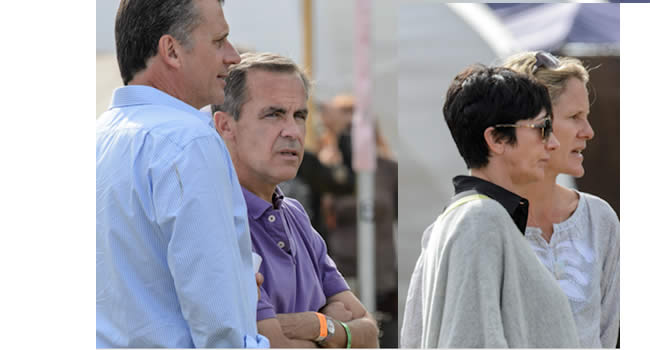
Canadians are now staring at the image, squinting, and asking themselves: Did Carney know her? Was he aware of who he was standing next to? His campaign insists it was a fleeting social moment — a shared event with a family connection, nothing more. Maxwell was an acquaintance of a relative. That’s the official line. And yet, in politics, optics often outweigh nuance. One snapshot can become a narrative, and one narrative can linger for years.
The pain point here isn’t whether Carney was friends with Maxwell — it’s how it looks now. Social media thrives on brevity and shock. People scroll past policy and portfolio performance, pause on a single frame, and start connecting dots that may or may not exist. In a world obsessed with moral clarity and guilt by proximity, even a polite smile at a crowded event can feel like a scandal waiting to happen.
And it’s not just Maxwell. The broader network — Prince Andrew, Epstein, elites flying under the radar — casts a long shadow. Carney may have been a financial wizard, a calm voice in global markets, but suddenly the optics make him a participant in the kind of story that headlines love: power, privilege, and scandal-adjacent connections. Whether fair or not, in the court of public perception, perception is everything.
The result? Carney has to defend a decade-old photograph as if it were a live political scandal. It’s messy, uncomfortable, and painfully instructive. One misread handshake, one social circle misstep, and suddenly a career built on competence and credibility is being challenged by optics and questions. Canadians are reminded: in modern politics, history never forgets, and the digital footprint never dies.
At the end of the day, Carney’s challenge isn’t just Maxwell, Prince Andrew, or even the voters’ questions. It’s the relentless reality that in politics, no image is innocent. No association goes unseen. And no past social moment can be swept under the rug once the spotlight turns its glare toward it.