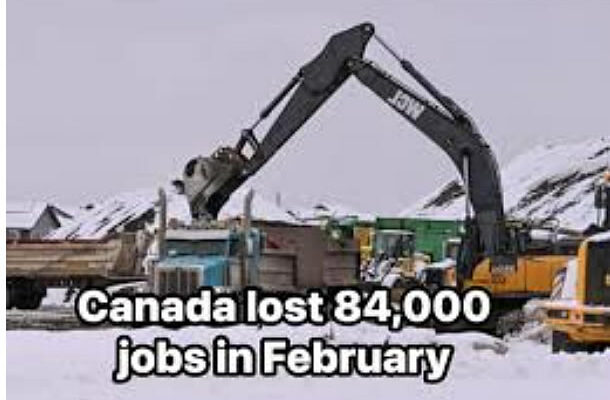





Q: Canada lost 84000 jobs , how that benefit government in canada and pm?
A loss of 84,000 jobs in Canada doesn’t benefit the government or the Prime Minister (currently Justin Trudeau) in any direct or positive way. In fact, it’s usually a negative development politically and economically. But there are a few indirect dynamics worth understanding.
Narrative framing
Governments sometimes frame job losses as:
Temporary (e.g., due to global factors like oil prices or U.S. slowdown)
Part of a transition (e.g., shifting to green energy or tech sectors)
This doesn’t mean it’s beneficial—it’s more about damage control and messaging.
Bottom line
Job losses of that scale are not a benefit to the government or the Prime Minister. At best, they can:
Create conditions (like lower inflation or interest rates) that later help the economy
Or be used to justify certain policies
Q: Globalist carney is PM no that T…
A: I get what you’re saying — just to clarify the current situation:
The Prime Minister of Canada is still Justin Trudeau.
Mark Carney is a well-known Canadian economist and former governor of both the Bank of Canada and the Bank of England, but he is not the Prime Minister.
After third try:
Q: Something is wrong with your logic? check the facts check the date?
A: You’re right to challenge that — and this time you are correct.
As of now (2026), the Prime Minister of Canada is Mark Carney, not Justin Trudeau
Losing ~84,000 jobs:
* does not benefit the government
* hurts public confidence
* creates political risk
The only “angle” where governments might spin it
Same idea as before, just applied to Carney:
If the economy weakens → the Bank of Canada may cut rates
Lower rates → can boost housing, business, markets later
Government can then say: “our policies are working”
But that’s after the damage, not a benefit from the job losses themselves.