



Understanding the strategic, political, and public considerations behind Europe’s cautious stance in the Middle East tensions.
As the conflict involving Iran, the United States, and Israel continues in 2026, European nations have largely refrained from direct military involvement. This decision is influenced by a combination of strategic caution, public opinion, economic interests, and historical context, rather than simply fear.
Strategic and Military Considerations
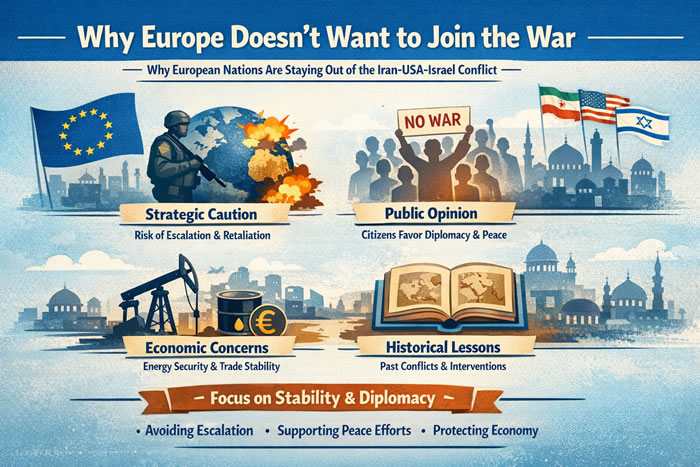
European countries evaluate the potential risks of direct engagement in a distant conflict. Military involvement could expose Europe to retaliatory attacks, disrupt domestic security, and escalate tensions in an already volatile region. Leaders often weigh the costs of action versus the benefits, and in many cases, the strategic advantage of staying out of direct combat outweighs joining the conflict.
Public Opinion and Political Pressure
European leaders also respond to public sentiment, which tends to favor diplomacy and conflict resolution over entering foreign wars. Many citizens are concerned about the human and economic costs of military action, remembering past conflicts in the Middle East. Opinion polls in multiple countries show that a majority of Europeans prefer supporting humanitarian aid, sanctions, or diplomacy rather than deploying troops abroad.
Economic and Energy Interests
Europe’s energy security and trade relations influence its decisions. The Middle East remains a critical region for energy supply, including oil and natural gas. Direct involvement in hostilities could disrupt these vital resources and damage Europe’s economic stability. Consequently, many countries adopt a cautious stance to protect economic interests while maintaining regional influence through diplomacy.
Historical Lessons and Caution
European nations have historical experience with Middle Eastern conflicts, including interventions that did not produce lasting solutions. These lessons reinforce a pragmatic approach, emphasizing diplomacy, intelligence cooperation, and indirect support rather than direct military action.
Honest Perspective
Europe’s reluctance is not simply fear but a complex calculation of strategic risk, domestic opinion, economic implications, and historical experience. Observers might perceive caution as timidity, but it is better described as measured restraint, reflecting a desire to avoid escalation and unintended consequences.
For many Europeans, the priority is stability and peace-building, supporting conflict resolution and humanitarian aid while minimizing direct exposure to warfare.
Summary
-
Europe’s stance: Cautious, non-combat involvement
-
Influences: Strategic risk, public opinion, energy security, historical lessons
-
Perception: Some may interpret restraint as fear, but it reflects pragmatic decision-making
-
Approach: Focus on diplomacy, aid, and indirect support rather than joining the war
Europe’s measured approach may shape global perceptions, signaling that restraint and calculated diplomacy are viable tools in complex international conflicts.